
Currently Empty: 0,00 €
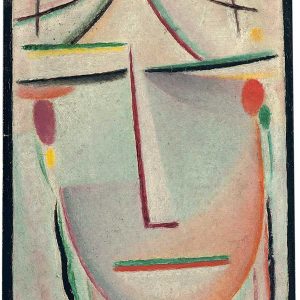
Oil painting titled “Abstrakter Kopf” (Abstract Head) or “Heilandsgesicht” (Face of the Savior). The artist believed that great art should be painted with religious feeling and that the human ...
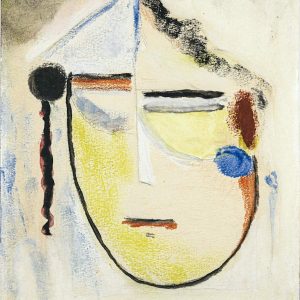
Oil painting “Abstrakter Kop” (“Abstract Head”). Jawlensky began drawing “mystical heads” or “faces of saints” around the end of World War I (1918).
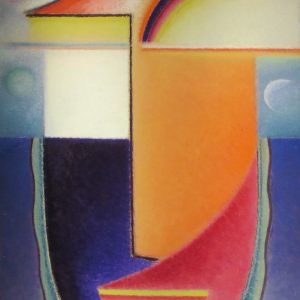
Oil painting “Abstrakter Kopf: Erscheinung” (“Abstract Head: Appearance”). Like Claude Monet, who worked in series, Jawlensky focused on a single theme, varying his brushstroke and colors to explore transcendent ...
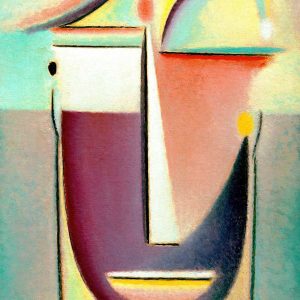
Oil painting “Abstrakter Kopf: Urform” (“Abstract Head: Archetype”). This painting is often referred to as both “Abstract Head: Primordial Form” (Abstrakter Kopf: Urform) and “Abstract Head: Archetype”. The terms ...
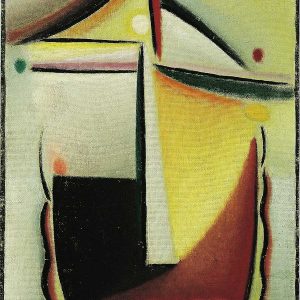
Oil painting “Abstrakter Kopf – Herbst und Sterben” (“Abstract Head: Autumn and Dying”). The work is part of a series of paintings in which Jawlensky progressively focused on the ...
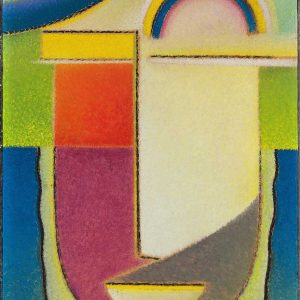
Oil painting “Abstrakter Kopf: Ostern” (“Abstract Head: Easter”). Jawlensky began the series “mystical heads” or “faces of saints” at the end of the First World War (1918).
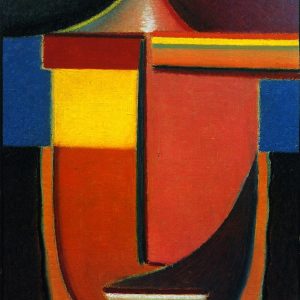
Oil painting “Abstrakter Kopf: Karma” (Abstract Head: Karma). At the end of the First World War, the artist began painting his series of “mystical heads” or “faces of saints” ...
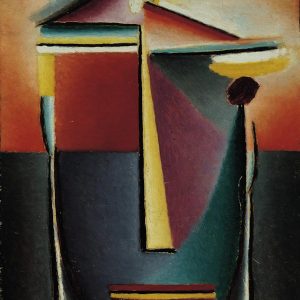
Many writers have noted Jawlensky’s progressively religious concentration upon the human face during the last twenty years of his life. He expressed this spiritualized conception of humanity in a ...
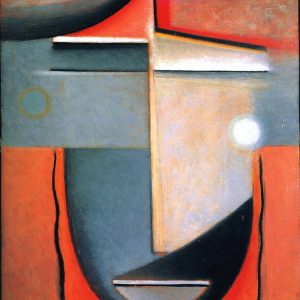
Oil painting “Abstrakter Kopf: Liebe” (“Abstract Head: Love”). The artwork is a visual exploration of emotions through abstract geometry, focusing on the human face in a de-individualized and iconic ...

Oil painting “Abstrakter Kopf: Klarheit” (“Abstract Head: Lucidity”). Jawlensky began the series “mystical heads” or “faces of saints” at the end of the First World War (1918).
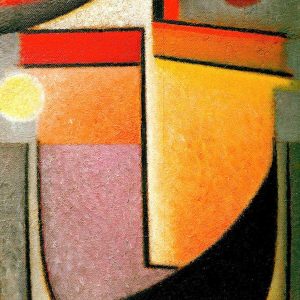
Oil painting “Abstrakter Kopf: Morgenlicht” (“Abstract Head: Morning Light”).
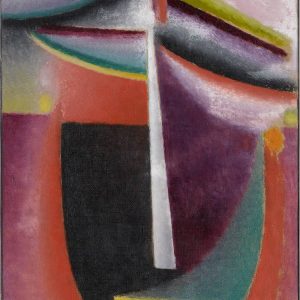
Oil painting “Abstract Head, Mysterium” (Abstrakter Kopf, Mysterium) The work presents a stylized portrait with vibrant colors and simplified forms, focusing on spiritual and mystical expression.
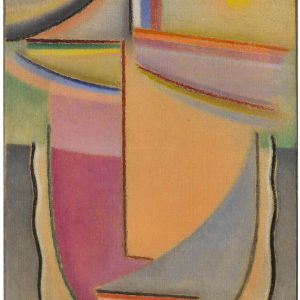
Oil painting “Abstrakter Kopf: September” (“Abstract Head: September”). The works in the series are characterized by an elongated, symmetrical “U”-shaped face. Although abstract, Jawlensky’s forms were always based on ...
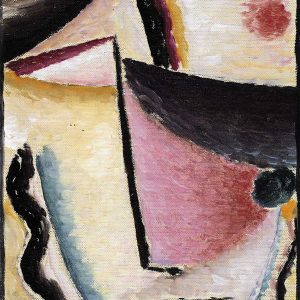
“After the ‘Mystic Heads’ and the ‘Saviour Heads’, the ‘Abstract Heads’, painted between 1918 and 1933, are the next logical step in Jawlensky’s abstraction and his move towards colour ...

Oil painting “Abstrakter Kopf: Sonne-Farbe-Leben” (“Abstract Head: Sun-Color-Life”).
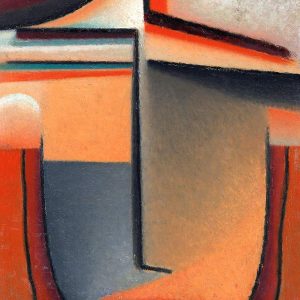
Oil painting “Abstrakter Kopf: Tragik” (“Abstract Head: Tragedy”).
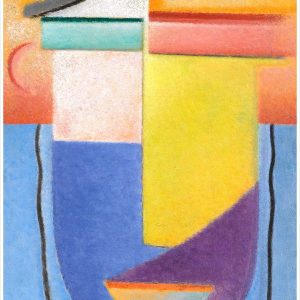
Oil painting “Abstrakter Kopf: Wasser und Licht” (“Abstract Head: Water and Light”). Jawlensky created a series of approximately 300 “Abstract Heads” works starting in 1918, stylizing faces as masks ...
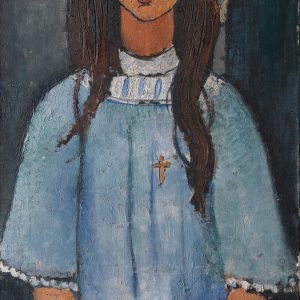
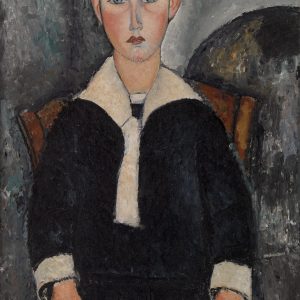
Boy in Sailor Suit Other references: Boy in a sailor suit – Boy – Boy with white collar – Garçon au col blanc – Seated boy Source Collection Barnes ...
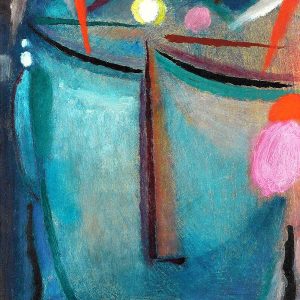
Oil painting “Gesicht Christi, Dornenkrone” (“Face of Christ, Crown of Thorns”). The work is part of a series of oil paintings of Christ’s faces, or “mystical heads,” that the ...
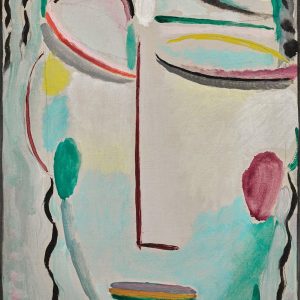
Expressionist oil painting “Heilandsgesicht: Auferstehung oder Das Neue Sehen II” (Face of the Savior: Resurrection or The New Seeing II). The work is part of a series of paintings ...
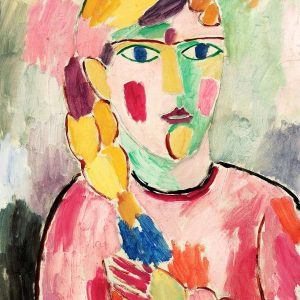
Oil painting “Mädchen mit blauen Augen und einem Zopf” (“Girl with Blue Eyes and a Ponytail”).
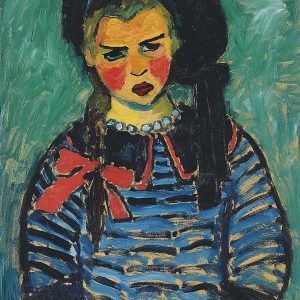
Oil painting “Mädchen mit roter Schleife” (“Girl with Red Ribbon”). Jawlensky was influenced by Matisse’s Fauvism, which is visible in his use of vibrant, unnatural colors for the skin ...
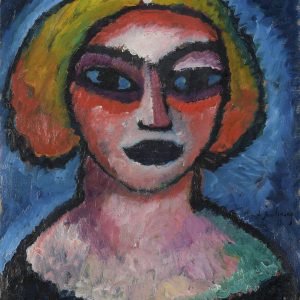
Oil painting “Frauenkopf” (“Head of a Woman”). Jawlensky primarily used primary colors and visible brushstrokes, with large eyes and black lips dominating the face. The painting is on display ...
