
Currently Empty: 0.00 €
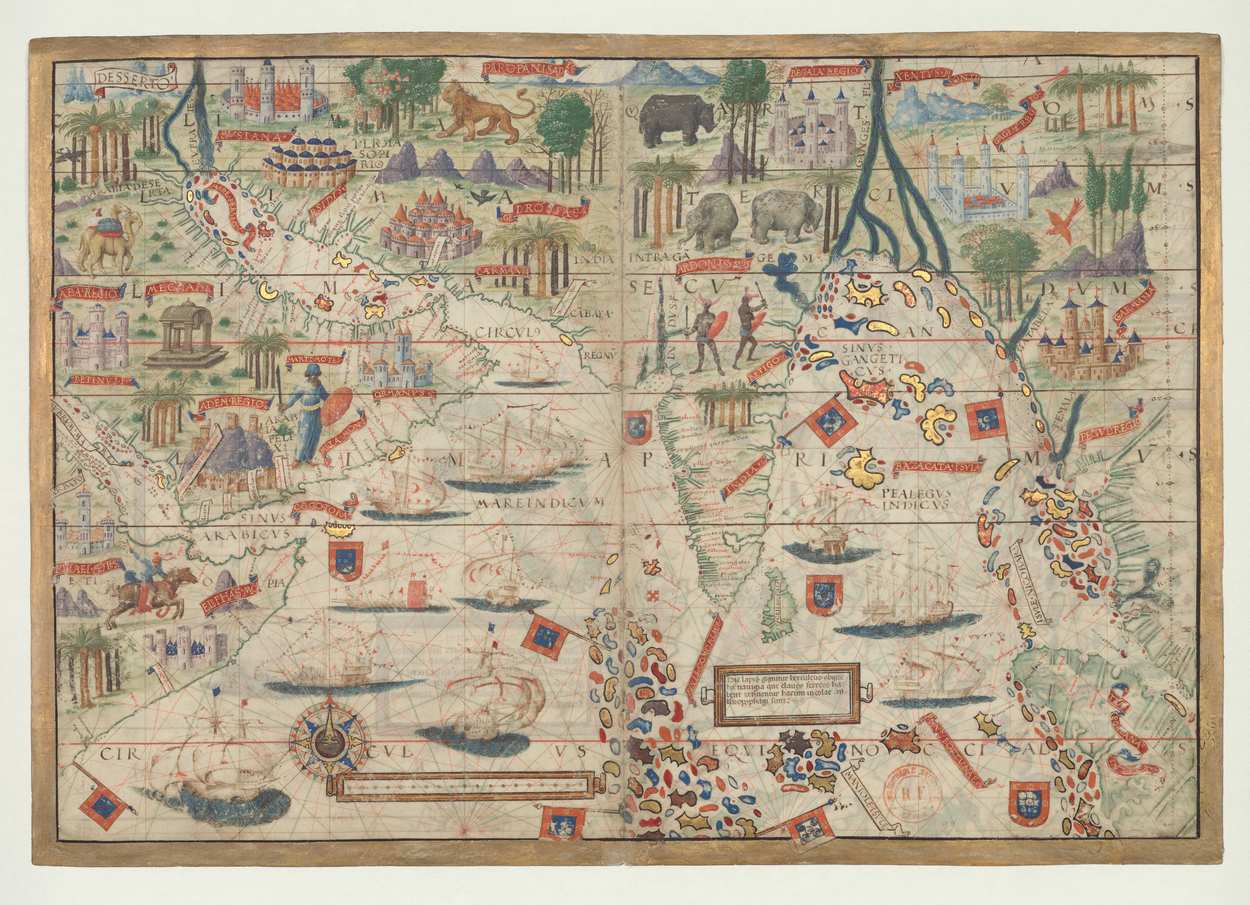
Gaze Upon the Exotic Eastern Kingdoms of the Miller Atlas
Step directly into the luxurious maritime empire of King Manuel I with this breathtaking 1519 reproduction from the world-renowned Miller Atlas. Meticulously charted by Lopo Homem and the Reinel family, this double-page manuscript captures the Northern Indian Ocean, showcasing the wealthy trade routes stretching from the Arabian Peninsula across India to the legendary Bay of Bengal. Elegantly hand-painted vignettes illustrate ancient fortified cities, royal eastern sovereigns in full regalia, and magnificent native wildlife including elephants, lions, and tropical birds inhabiting the lush subcontinent landscapes.
An Opulent Visual Legacy of the Portuguese Spice Route
Infuse your interior spaces with the unmatched grandeur, vibrant coloration, and artistic brilliance of the golden age of discovery. The deep indigo seas, intricately woven wind roses, and historical Portuguese caravels flying royal heraldic banners create an enchanting coastal centerpiece for fine art galleries or prestigious corporate workspaces. Printed with museum-grade accuracy on premium textured mediums, this rare geographic treasure makes a spectacular luxury gift for professional cartographers, military historians, and collectors of antique global artwork.
Contributor: ?
Date: 1519
Reviews
Only logged in customers who have purchased this product may leave a review.
Delivery & return
Delivery & return
Next day delivery in store
Buy before 6pm to receive your order next day.FREE
Next day delivery
Orders before 6pm from Monday to Saturday (or before 1pm on Sunday) will be delivered Next working day (except Northern Ireland and Highlands). Orders placed after 6pm (after 1pm on Sunday) or for Northern Ireland and Highlands will be delivered in 2 working days.29 USD
Drop Point
In 2-3 working days. Pick up your parcel in one of the many diferent collection points available and during a wide range of hours.39 USD
Same day delivery in London:
Place your order before 13:00 to get it today!. If you order later on, you’ll receive it the next day and if you order on Sunday, you’ll receive it the next working day.59 USD
Shipping Info
Shipping Info
SHIPPING
Complimentary ground shipping within 1 to 7 business days In-store collection available within 1 to 7 business days Next-day and Express delivery options also available Purchases are delivered in an orange box tied with a Bolduc ribbon, with the exception of certain items See the delivery FAQs for details on shipping methods, costs and delivery timesComposition
Composition
Characteristics of wood :
- Hard, compact , fiberous and porous
- Good wood gives a rich, warm and beautiful surface.
Wood is used for the construction of:
- Floor, Furniture, Walls
- Incidental furnishing (lampshades, picture frames)
- Kitchen & restaurant ware


There are no reviews yet.